September 24, 2026
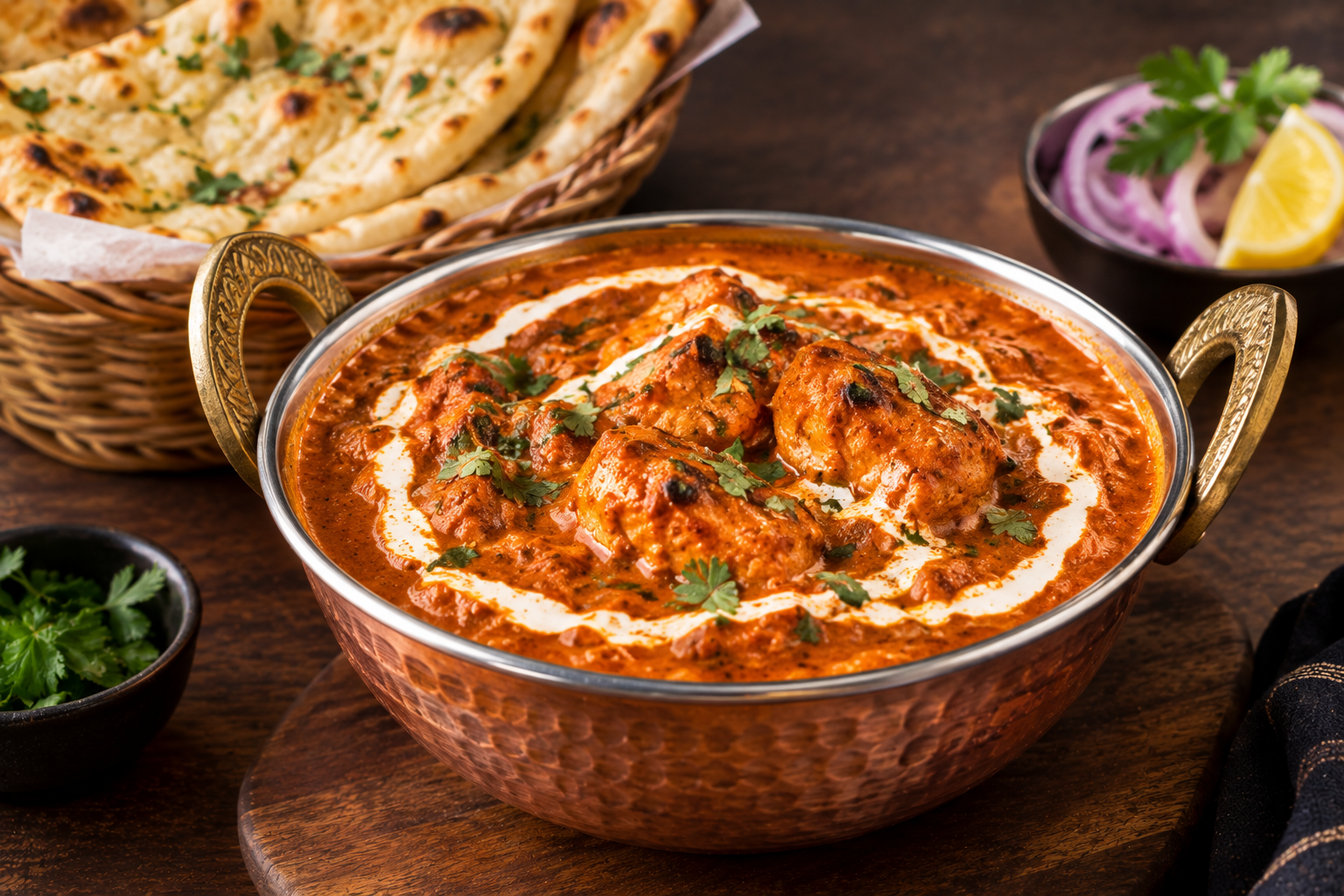
Very few dishes carry a cuisine on their back the way butter chicken carries Indian food outside of India. For a lot of people, it was the first Indian dish they ever tried, the one that made curry feel approachable rather than intimidating, and the dish most likely to appear on a restaurant menu in a city with no other Indian food in sight.
What most people don't know is that it wasn't invented as a signature dish at all. It came out of a kitchen trying not to waste food, and the story behind it is stranger, and more contested, than the smooth, buttery curry itself would suggest.
For a lot of searchers, butter chicken is a comfort order, something familiar to fall back on rather than a dish they're actively comparing across restaurants. But the search still comes with an unspoken standard. People expect a specific texture and flavor, a rich, slightly tangy tomato gravy, real body from butter and cream, and tender chicken that clearly started in a tandoor rather than a plain saucepan. When that combination is missing, even a well-seasoned tomato curry doesn't quite read as butter chicken.
Butter chicken traces back to Moti Mahal, a restaurant founded in the early 20th century by Kundan Lal Gujral, a chef who had run restaurants in Peshawar before relocating to Delhi around the time of Partition in 1947. The dish itself is generally described as a happy accident rather than a planned invention. Tandoori chicken, another dish credited to the same kitchen, would sometimes go unsold or dry out slightly after cooking. Rather than waste it, the leftover chicken was simmered in a gravy built from tomatoes, butter, and cream, a combination created specifically to rehydrate and enrich the meat rather than to introduce a brand-new flavor to the menu.
That practical fix became one of the most recognizable dishes in the world. The gravy itself was flexible enough to work with other proteins and vegetables too, which is part of why dishes like paneer makhani exist as close relatives built on the same base.
The story isn't as settled as most menus make it sound. In 2024, the modern-day Moti Mahal restaurant group filed a lawsuit against a rival Delhi restaurant, Daryaganj, over who actually deserves credit for inventing butter chicken. Moti Mahal's current leadership, descendants of Kundan Lal Gujral, argue the dish was created by their grandfather back in Peshawar before Partition. Daryaganj's owners counter that their relative, Kundan Lal Jaggi, partnered with Gujral when the restaurant reopened in Delhi in 1947, and that the dish was actually developed there, jointly.
The dispute became national news in India, with both sides presenting old documents and family history to support their claims. It's a reminder that even a dish as universally familiar as butter chicken doesn't have one clean, agreed-upon origin story, and that the version most people know today came out of a specific, disputed moment in a handful of Delhi kitchens less than a century ago.
The detail that gets lost most often is that butter chicken is supposed to start with tandoor-cooked chicken, not raw chicken simmered directly in the gravy. That step matters. Tandoor cooking sears the exterior of the marinated chicken at very high heat, giving it a slight char and a firmer texture before it ever meets the sauce, and that contrast between the seared chicken and the smooth, rich gravy is a big part of what makes the dish work.
This is also what separates butter chicken from similar-looking dishes like tikka masala, which shares a comparable tomato-cream base but developed along a different, equally debated path, largely outside India. A butter chicken made by simmering raw chicken straight into the sauce will still taste rich, but it skips the textural contrast that the original version was built around, and that's usually the difference between a dish that tastes good and one that tastes right.
Frequently Asked Questions
They're closely related but not identical. Both use a tomato-cream base, but butter chicken traces back specifically to Moti Mahal in Delhi, while tikka masala's origin is separately debated and often tied to South Asian restaurants outside India.
The dairy in the gravy, butter and cream, naturally softens the spice level compared to drier, chili-forward curries, which is part of why it's often recommended as a starting point for people new to Indian food.
According to the most widely told version of its history, yes. It came from a Delhi restaurant simmering leftover tandoori chicken in a tomato-butter gravy rather than letting it go to waste, and the dish grew from there.
Yes. The gravy holds up well over time since it's already rich and slow-cooked. Placing an online order directly with the restaurant is generally the most reliable way to get it fresh, rather than routing through a third-party delivery app.
Butter chicken tends to be the first dish people order at a new Indian restaurant, which makes it a fair, low-risk way to judge a kitchen before trying anything more unfamiliar. At The Monks, located at 790 W Exchange Pkwy #140, butter masala is part of a menu built on made-to-order preparation, the same approach that shapes the rest of the kitchen's tandoor dishes, curries, and biryanis, rather than a version pulled from a pre-made batch and reheated to order.
That made-to-order detail matters specifically for a dish like this one, where the gravy is meant to be built fresh around chicken that's already been through the tandoor, not assembled ahead of time and held. Anyone curious how butter chicken is positioned alongside the kitchen's other curries can browse the monksallen menu to see the full range before deciding what to order.
Butter chicken's popularity says as much about how food travels and adapts as it does about the dish itself, a Delhi kitchen's fix for leftover tandoori chicken becoming one of the most ordered dishes on the planet. Questions about hours, location, or catering for larger groups are best answered by reaching out directly, rather than guessed at from a search result.